
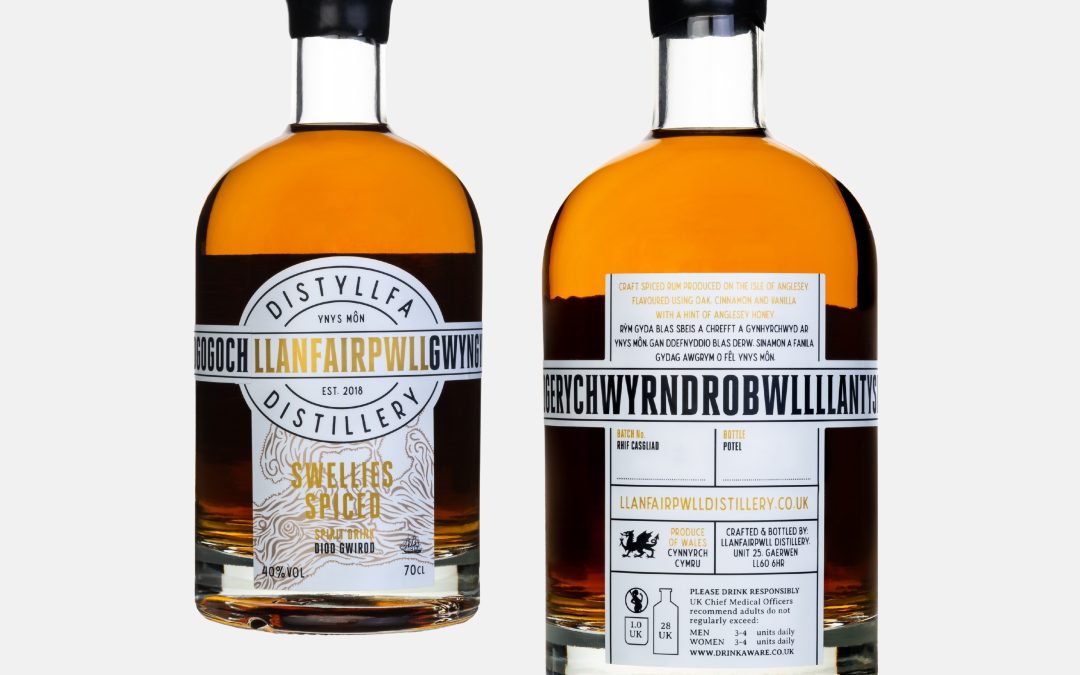
In this guide, we explain the key alcohol labelling regulations in the UK, what information must appear on your labels, and best practice for creating compliant, high-quality alcohol bottle labels that both meet legal requirements and help your products stand out on the shelf.
Whether you’re launching a craft beer, premium spirit, or wine beverage, ensuring your product complies with UK alcohol labelling regulations is an essential part of bringing it to market. Your label not only represents your brand but must also provide consumers with the legally required information in a clear and compliant way.
Understanding alcohol label requirements can seem complex, particularly as regulations evolve and different products may be subject to specific rules. Taking the time to get your labels right from the outset can help ensure compliance and avoid unnecessary delays or reprints.
Mandatory alcohol labelling requirements in the UK
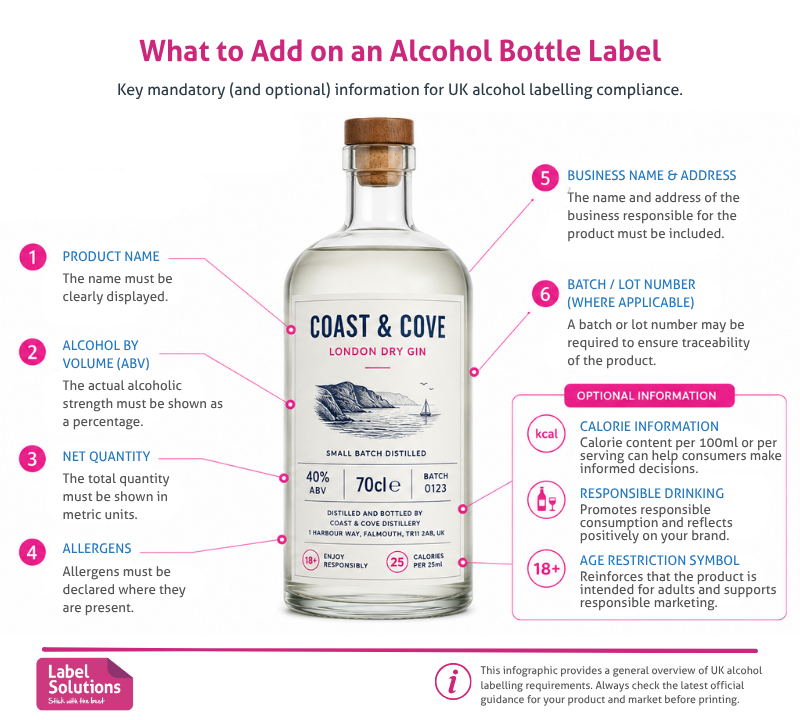
Before considering industry best practice, it’s important to understand the core information that is required on alcohol bottle labels in the UK. Depending on the product, this may include:
- Product name
- Alcohol by Volume (ABV)
- Net quantity
- Name and address of the responsible food business
- Allergen information (where applicable)
- Batch or lot identification (where required)
Additional requirements may apply depending on the type of alcoholic drink, where it is sold and whether it is intended for the UK or export markets.
Understanding UK alcohol labelling regulations
Since the UK left the European Union, some food and drink labelling requirements have changed. If you’re selling alcoholic drinks in Great Britain (England, Scotland and Wales), you’ll need to ensure your labels comply with current UK legislation. Businesses supplying products to Northern Ireland or exporting overseas may also need to meet additional requirements depending on their destination market.
As alcohol labelling regulations can change over time, it’s important to check the latest official guidance before printing or reordering labels. This is particularly important if you’re launching a new product, updating your branding or selling into multiple markets.
If you’re unsure whether your labels are suitable for your intended market, seeking advice before printing can help avoid costly reprints and delays.
Portman Group Best Practice Guidance
While this guide focuses on UK alcohol labelling regulations, many producers also follow the Portman Group’s Alcohol Labelling Guidelines, which set out recognised industry best practice for communicating health and responsibility information on alcohol packaging.
The Portman Group recommends that alcohol labels include the following minimum best practice information:
- Unit alcohol content per container (This recommendation is separate from the legal requirement to display Alcohol by Volume (ABV), which must appear on alcoholic drinks sold in the UK.)
- Drinking during pregnancy warning logo or message
- Clear signposting to Drinkaware.co.uk
- Chief Medical Officers’ Low Risk Drinking Guidelines 2016
While meeting legal requirements is essential, it’s equally important to consider how this information is presented. Mandatory details should be easy to read, positioned clearly on the label and integrated into your overall design without compromising your brand’s appearance. A well-designed label achieves both compliance and strong shelf appeal.
Unit alcohol content:
Alcohol by Volume (ABV) must be displayed on all alcohol labels sold in the UK. In addition, the Portman Group recommends displaying the total number of alcohol units per container. Where a spirit label, wine label or beer label relates to a product containing multiple servings, producers are encouraged to include the number of alcohol units per serving to provide consumers with clearer information. If secondary packaging is used, the same alcohol unit information should also appear on the outer packaging.
Pregnancy message:
The Portman Group recommends including a pregnancy warning on alcohol labels, either as a recognised pictogram or a clear written statement. Your label designer can help incorporate this into your artwork while maintaining your brand’s appearance.
Drinkaware:
The Portman Group also recommends displaying the Drinkaware website and approved branding as part of its best practice guidance. You can find details on obtaining permission to use the Drinkaware logo here: https://resources.drinkaware.co.uk/collections/drinkaware-logo-licence
Chief Medical Officers’ Low Risk Drinking Guidelines:
It is also recommended to include the Chief Medical Officers’ Low Risk Drinking Guidelines on alcohol labels using the approved wording.
Optional information for alcohol labels
In addition to the mandatory information required by UK alcohol labelling regulations, many brands choose to include extra details that enhance the customer experience and demonstrate responsible business practices. While not legally required in most cases, the following elements may add value to your labels.
Calorie information
Displaying calorie information is generally voluntary for alcoholic drinks in the UK. However, many consumers appreciate greater transparency when making purchasing decisions, so including calorie content can help support more informed choices. Where appropriate, you may also wish to display the calorie content per serving, particularly for products intended to be consumed over multiple servings.
Responsible drinking messages
Many alcohol producers choose to include a responsible drinking message or recognised responsibility logo on their labels. Although this isn’t usually a legal requirement, it demonstrates a commitment to promoting responsible consumption and can reinforce your brand’s reputation.
Age restriction symbols
Adding an age restriction symbol, such as ’18+’, isn’t generally mandatory on product labels, but many brands include one to reinforce that the product is intended for adults. It provides an additional visual reminder for retailers and consumers while supporting responsible marketing practices.
Before adding any optional information to your labels, it’s always advisable to check what’s relevant to your product category and ensure any voluntary claims or statements are accurate.
Why alcohol labelling compliance matters
A label is more than just part of your branding — it’s also a legal requirement. Accurate and compliant labelling helps consumers make informed purchasing decisions while ensuring your products can be sold with confidence.
Getting your labels right from the outset can help you avoid unnecessary delays, reprinting costs and potential compliance issues. It also gives consumers greater confidence in your brand by presenting clear, professional and trustworthy product information.
Common alcohol labelling mistakes
Before sending your artwork to print, check for these common mistakes:
- Missing mandatory information – Ensure all legally required information is included and up to date.
- Confusing legal requirements with voluntary guidance – Make sure you understand which information is required by law and which follows recognised industry best practice, such as the Portman Group guidelines.
- Incorrect or unclear ABV declaration – The alcohol by volume must be displayed in the correct format and be easy to read.
- Poor text legibility – Small font sizes or low colour contrast can make important information difficult for consumers to read.
- Overlooking allergen requirements – Where allergens are present, they must be declared in accordance with current regulations.
- Choosing the wrong label materials – Drinks stored in fridges, ice buckets or chilled environments require label materials and adhesives that can withstand moisture without peeling or deteriorating.
- Not checking the latest legislation – Alcohol labelling regulations can change, so it’s important to review the latest guidance before printing new labels.
Choosing the Right Labels for Alcohol Products
Complying with alcohol labelling regulations is only part of the process. The materials, adhesive and finish you choose can have a significant impact on both the appearance and performance of your labels.
Different alcoholic drinks are often stored, transported and displayed in different conditions, so it’s important to select a label that suits your product. For example, beer bottles and ready-to-drink cans may be kept in refrigerated cabinets or ice buckets, while premium spirits often benefit from textured materials, embossing or foil finishes to create a more luxurious look.
When choosing labels for alcohol products, consider:
- The environment – Will the product be chilled, exposed to moisture or handled frequently?
- Label materials – Select materials that suit your product and brand, whether that’s paper, polypropylene or other specialist options.
- Adhesive performance – Ensure the adhesive is suitable for the container and the conditions it will be exposed to.
- Print finishes – Foiling, embossing, spot UV and varnishes can help create a premium appearance while maintaining legibility.
- Sustainability – If sustainability is important to your brand, consider recyclable or responsibly sourced label materials where appropriate.
Choosing the right combination of materials and finishes helps ensure your labels not only comply with legal requirements but also remain attractive and durable throughout your product’s journey from production to the consumer.
Need Help Printing Compliant Alcohol Labels?
Navigating alcohol labelling regulations can seem complex, but with the right advice and expertise, you can ensure your bottle labels are both legally compliant and designed to make an impact.
At Label Solutions, we’ve been helping businesses create high-quality labels for over 25 years. Whether you’re launching a new craft beer, premium spirit, wine or ready-to-drink beverage, we can help you choose the right label materials, finishes and printing solutions to suit your product and brand.
If you’re unsure about your label artwork or need advice on selecting the best materials for your application, our experienced team is always happy to help. Contact us today to discuss your project or request a free quotation.

Recent Comments